
You've opened ten thousand doors in video games. Never thought twice about a single one. That's the point... and that's also the war.
Kurt Margenau, co-game director of The Last of Us Part II, summed up the problem in two words on Twitter: "F**ck doors."
Two words. Decades of frustration packed tight.
Here's what most people never consider. In the real world, doors are nothing. You grab, you push, you walk through. Your brain handles the physics, the spatial awareness, the grip pressure... all without a single conscious thought. But in a video game? That same nothing becomes everything.
Bryan Singh, a developer who worked on Journey, Uncharted 4, and both The Last of Us games, puts it plainly: "You have to consider every other situation, every other system, every other object and character that can interact with doors or be around doors when they're interacting."
Every. Other. System.
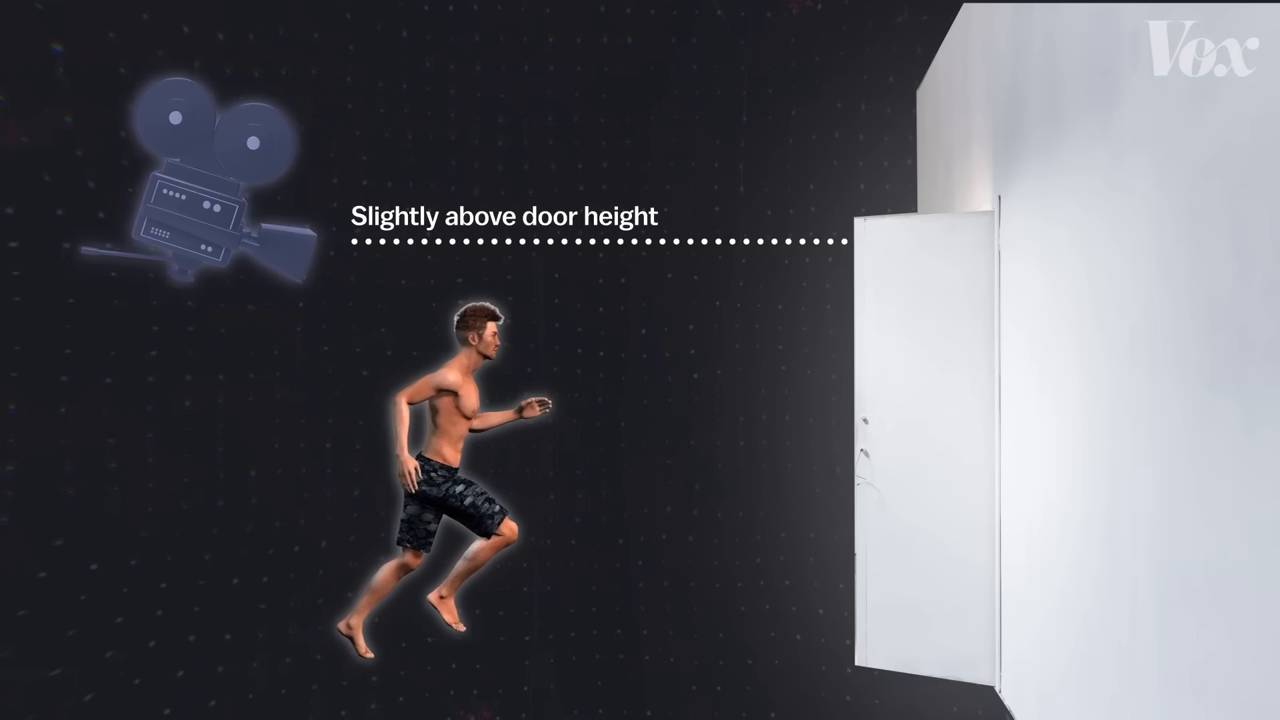
A door has to work with the camera. The animation. The AI pathfinding. The collision detection. The sound design. The emotional state of the character. The enemy on the other side who may or may not know it's locked. A door isn't a door... it's a crossroads where every department in the building has to show up and agree.
The Tiers of Pain
The game development industry has quietly built an unofficial difficulty scale for doors. Tier 0? No doors at all. Just open archways. World of Warcraft, Assassin's Creed... they looked at the problem and said "nah." Honestly? Smart.
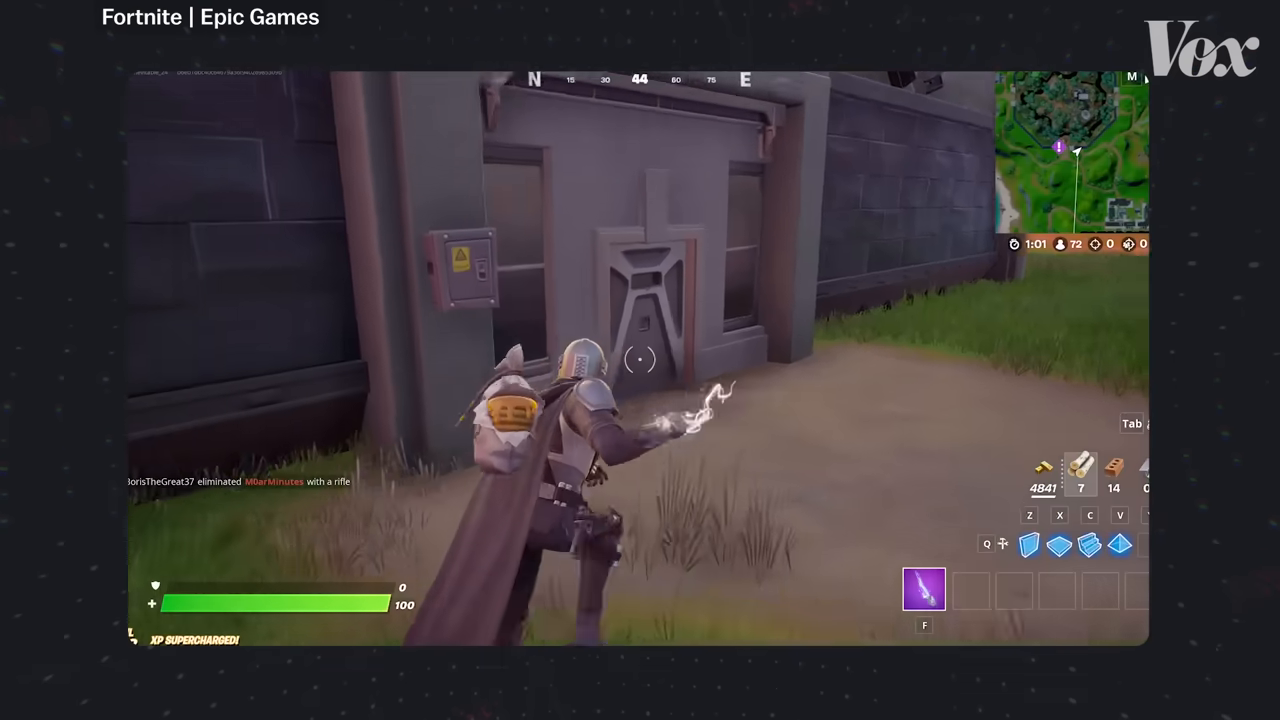
Tier 1 doors slide open when you get close. Think Halo. No in-between state. Open or closed. Clean.
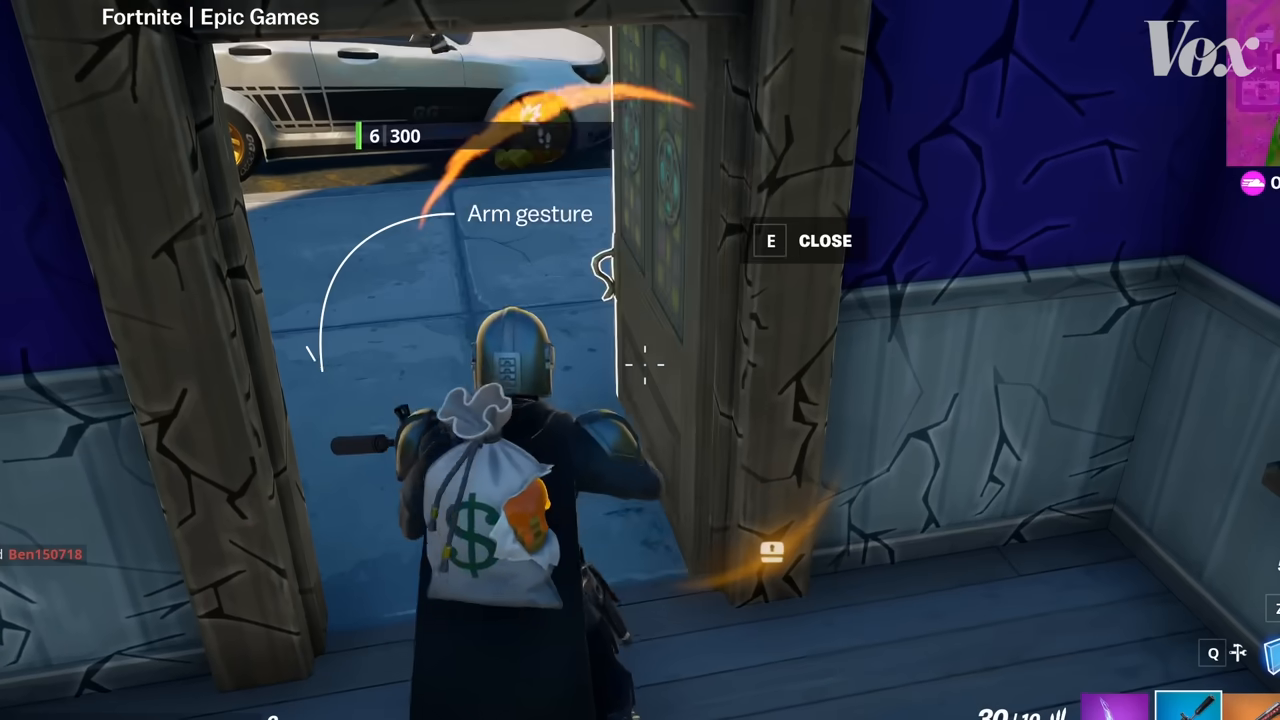
Tier 2 doors look real but don't quite behave real. They swing both directions... almost never happens in actual life. The character doesn't physically touch them. Fortnite throws in a little arm gesture to suggest contact... a magician's misdirection. And they're oversized by design. Because navigating a thumbstick through a normal-width doorframe is like threading a needle in oven mitts.
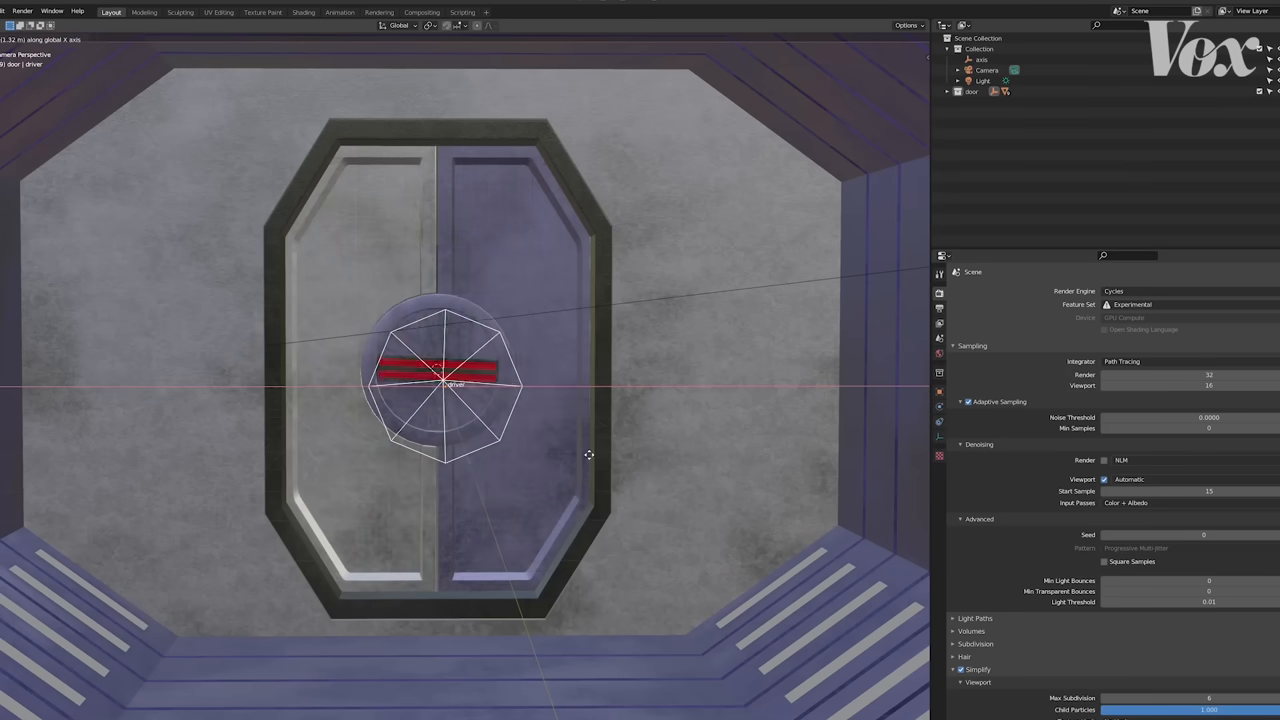
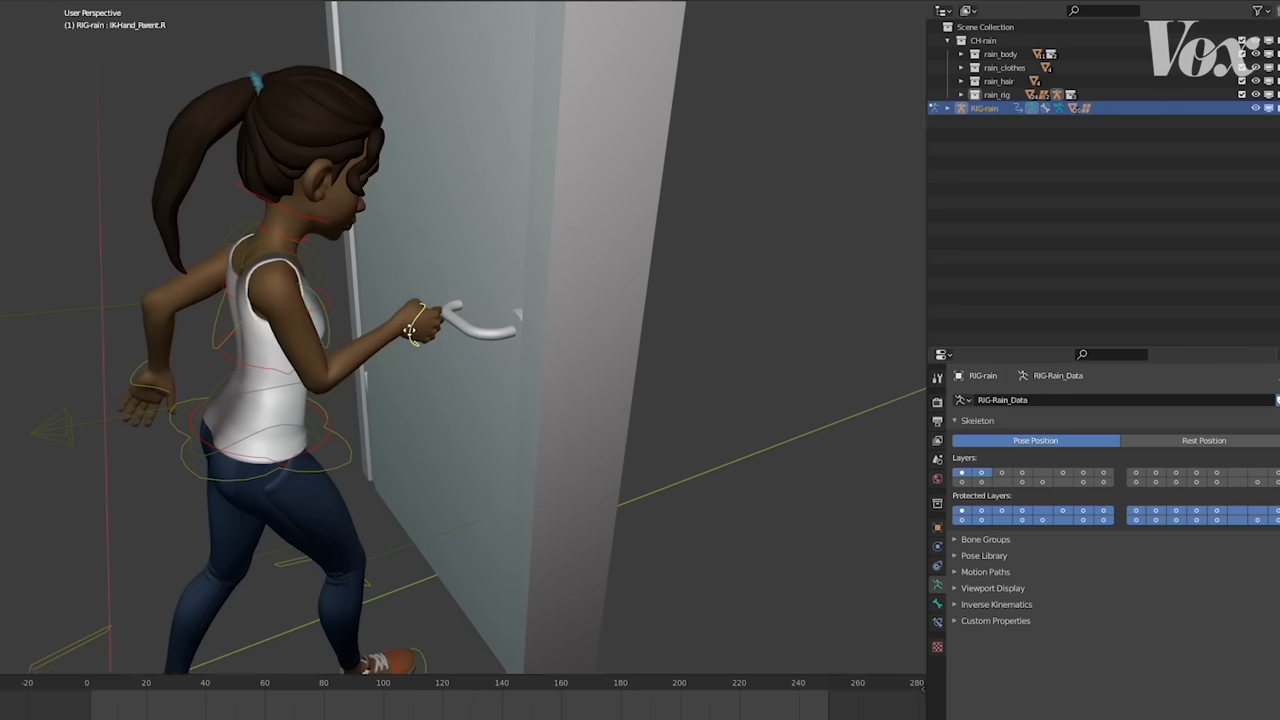
Then there's Tier 3. Maximum effort. The character physically grabs the handle, pushes the door, walks through. This is what Naughty Dog chased with The Last of Us Part II. And this is where it gets brutal.
The Golden Rule
Bryan Singh dropped something that hit me way deeper than game design: "Anytime you take control away from the player, it feels weird, it feels bad."
Read that again through a different lens.
Anytime you take control away from someone... it feels bad. In games. In mentoring. In parenting. In leadership. The moment you force someone through a scripted sequence instead of letting them move at their own pace, something breaks. Player agency isn't just a game design principle... it's a human one.
So the Naughty Dog team chopped door-opening animations into tiny interruptible pieces. You can break away mid-reach. You can change your mind. The system respects your autonomy even in a moment as small as opening a door.
That's not just good design. That's love disguised as code.
The Invisible Army
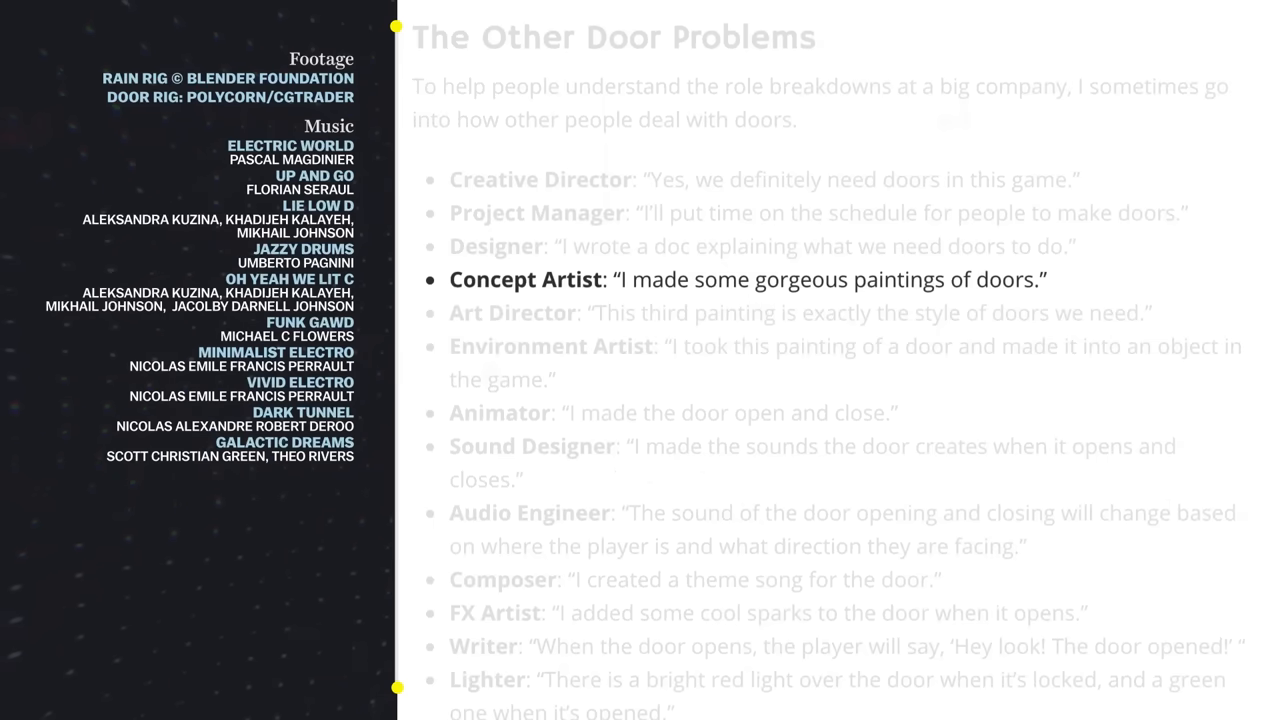
Here's where it really gets me. Liz England, a game designer, wrote a now-famous 2014 blog post called "The Door Problem." She maps out every question that needs answering before a single door gets built. Can the player open them? Do they lock? Do enemies come through? What about two players?
Then she lists everyone involved in making that door real. Concept artists design it. Composers write themes for the space behind it. Combat designers think about enemies on the other side. Writers craft voiceover. Sound designers create the creak and thud of wood or metal. Audio engineers spatialize that sound so it arrives from the right direction relative to the player.
And nobody playing the game thinks about any of it.
That's Quietly Working at its finest.
An army pouring craft into something specifically designed to be invisible. They're the Rebel engineers keeping the X-wings flying while Luke gets the medal ceremony. The better they do their job, the less you notice. The highest compliment is silence... the absence of "wait, that felt weird."
The Deeper Door
Bryan says it almost casually: "Every time you experience a disconnect, that's just like one more reminder that 'Oh yeah, I'm playing a video game,' instead of being invested into what's going on."
Every disconnect is a reminder that the thing isn't real.
True in games. True in relationships. True in organizations. Every moment of inauthenticity, every skipped detail, every "good enough"... it's a crack in the immersion. A quiet reminder that maybe nobody cared enough about the other side.
But when someone sweats the doors? When the small, invisible, thankless work gets the same love as the hero moments?
That's when people stop seeing the game and start living the story.
The developers who build doors won't trend on Twitter for it. The sound designer spatializing a creaking hinge won't win an award. The animator who segments a reach into six interruptible frames won't get a standing ovation.
But they showed up. They did the work. Quietly.
Light doesn't fight darkness... it just shows up. Sometimes it shows up as a door that opens exactly the way you expected it to.
Next time you push through a door in a game and feel nothing... pause. That nothing? Somebody's everything. An entire team built that invisible moment so you could stay lost in the story. The best work often lives where nobody's looking. So here's the question worth sitting with... where in your life are you the door builder? And who's walking through because you showed up? 💙
Original video by Vox — Watch on YouTube ↗
Get the Ultimate Gemstone Look with These AdvancedA professional VFX lighting lead’s free crystal tutorial reveals deep parallels between procedural damage in 3D modelingInvisible Labor, Craft MasteryThe TRUTH about shooting at ISO 100 that the PROS ISO is a gain control, not a noise generator… underexposing at low ISO and brightening later produces worse results thRealm-Recreation, Realm-WorkHow Filmmakers Make Cameras Disappear | Mirrors inFour distinct filmmaking techniques for hiding cameras in mirror shots reveal a deeper truth about the craft of doing esHumility, Collaboration
Echoes
Wisdom from across the constellation that resonates with this article.
“Celebrate the Quietly Working people in your circles who build the invisible infrastructure”
— Vox | Why video game doors are so hard to get right Same Expert
“Read Liz England’s ‘The Door Problem’ blog post for a framework on mapping hidden complexity in any project”
— Vox | Why video game doors are so hard to get right Same Expert
“Audit your team’s processes for moments where you ‘take control away’ from the people you serve”
— Vox | Why video game doors are so hard to get right Same Expert