
Imagine paying someone more money to think harder... and watching them get dumber. That's not a punchline. That's four decades of behavioral science we keep ignoring.
Dan Pink stands on a TED stage and does something unusual. He doesn't inspire. He prosecutes. Like a lawyer mounting a case before a jury, he lines up the evidence... study after study after study... and makes one thing painfully clear:
The way most organizations motivate people is broken. And we've known it for nearly 40 years.
The Candle Problem
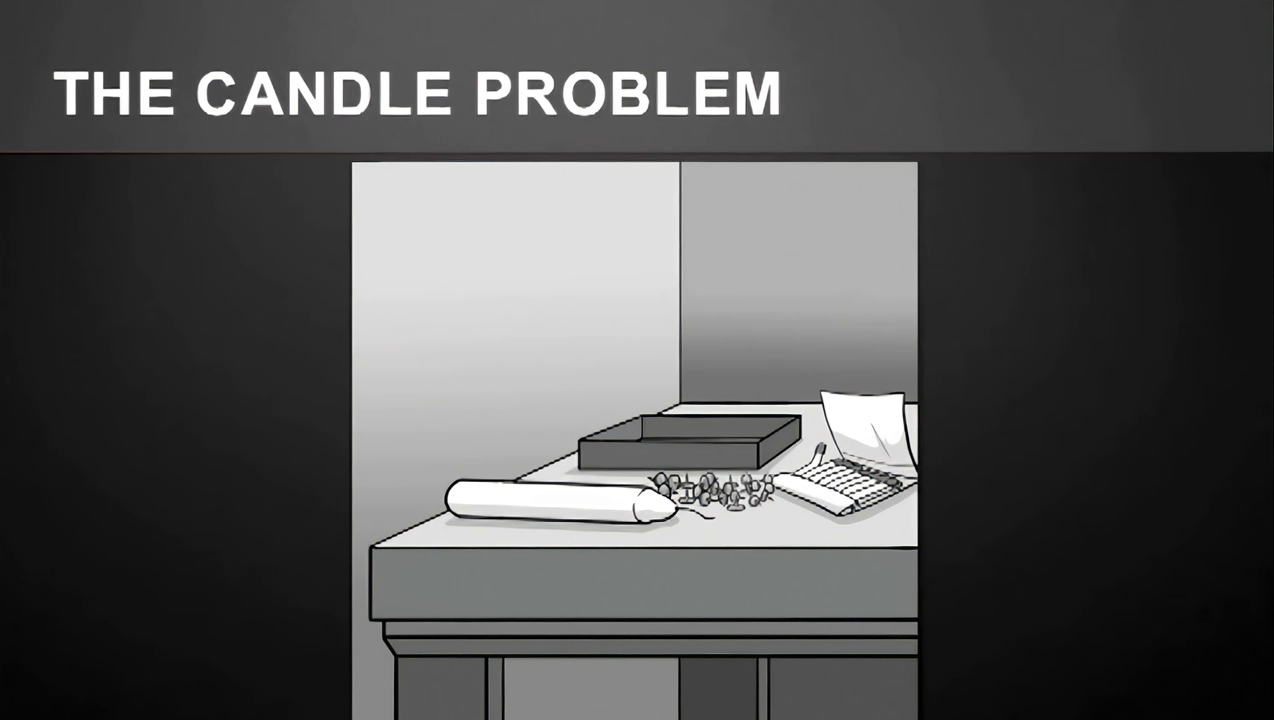
It starts with a deceptively simple experiment from 1945. A psychologist named Karl Duncker hands you a candle, a box of thumbtacks, and some matches. Your job: attach the candle to the wall so the wax doesn't drip onto the table.

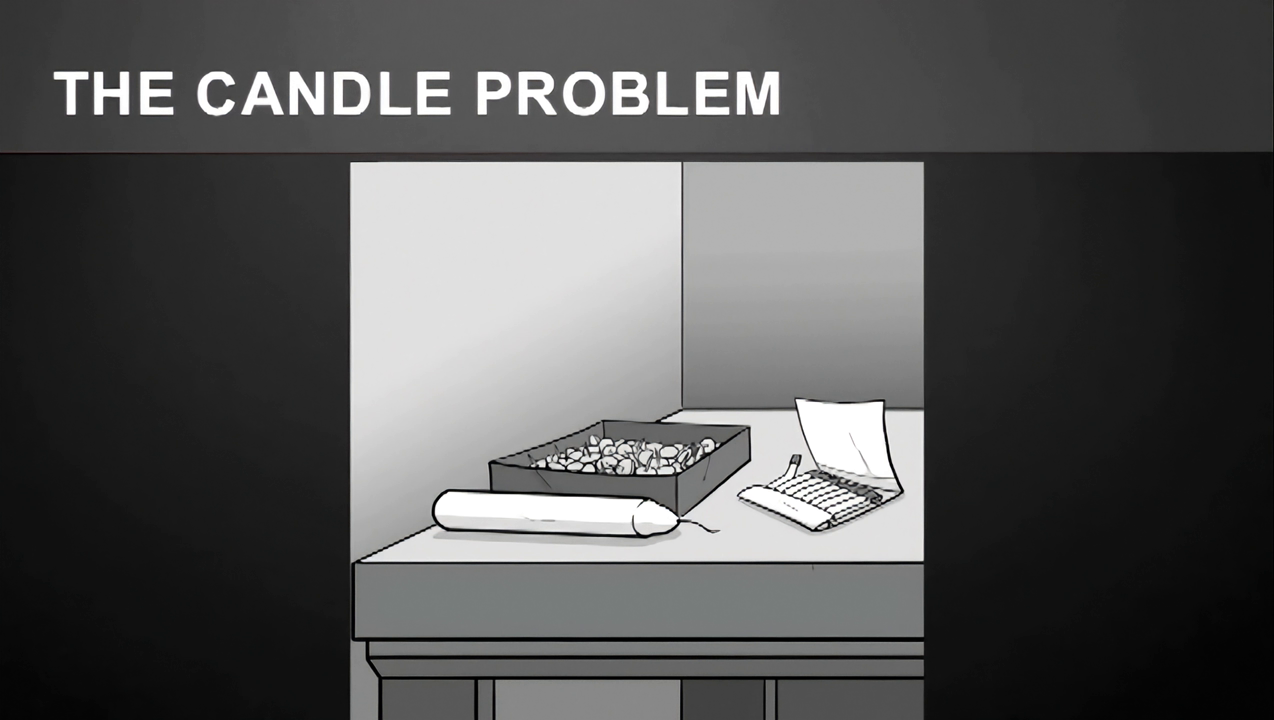
Most people try to tack the candle directly to the wall. Some melt the side and try to stick it there. Eventually... you realize the box itself is the platform. You empty it, tack it to the wall, set the candle inside. Done.
The trick is overcoming functional fixedness... seeing the box as more than just a container for tacks. You have to look at the periphery, not straight ahead.
Now here's where it gets interesting.
Scientist Sam Glucksberg ran this same experiment with incentives. One group was timed normally. The other was offered cash for fast solutions. The result? The incentivized group took three and a half minutes LONGER.
Let that land.
More money. Worse performance. On a task requiring creative thinking.
The Evidence Piles Up
Pink doesn't stop there. He marshals evidence like he's building a federal case:
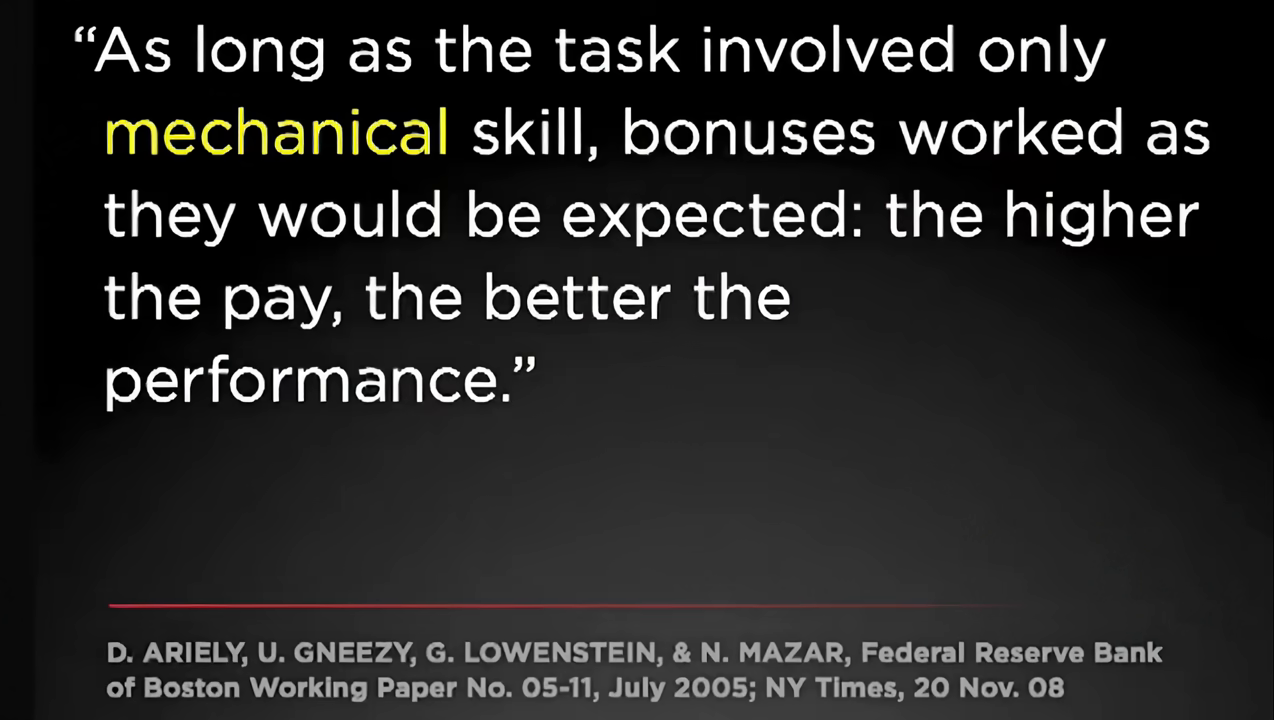
- Dan Ariely and colleagues at MIT tested students on games requiring creativity, motor skills, and concentration. Higher rewards? Worse performance on anything requiring even basic cognitive effort.
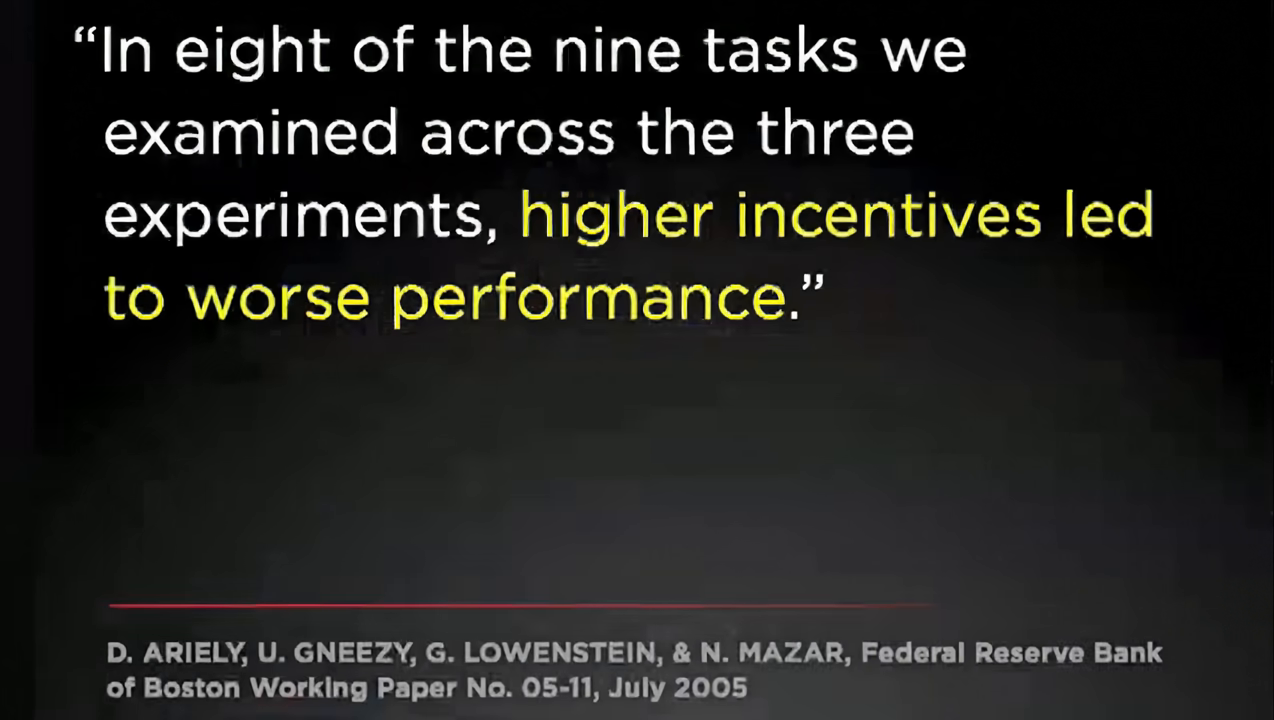
- They replicated the study in Madurai, India, where the rewards were relatively more meaningful. Same result. The highest-paid group performed worst of all. In eight of nine tasks across three experiments... higher incentives led to worse outcomes.
- Economists at the London School of Economics reviewed 51 studies on pay-for-performance. Their conclusion: "Financial incentives can result in a negative impact on overall performance."
This isn't philosophy. This isn't feelings. This is the Federal Reserve Bank of the United States sponsoring research that says our reward systems are fundamentally misaligned with how humans actually work.
And yet... most organizations keep doubling down on carrots and sticks. Sweeter carrots. Sharper sticks. More of the wrong thing.
Why It Matters Now
Pink draws a clean line. Extrinsic motivation works beautifully for simple, rule-based tasks. When the tacks are already out of the box... when the path is clear and narrow... rewards focus the mind and drive performance. That's 20th-century work.
But 21st-century work IS the candle problem. The rules are mystifying. The solutions are surprising. The path forward hides on the periphery, not straight ahead. And rewards... by their very nature... narrow focus. They compress possibility. They're designed to make you look HERE, not everywhere.
Every knowledge worker in every field is wrestling with their own version of the candle problem. Every. Single. Day.
A New Operating System
So what works instead? Pink points to intrinsic motivation... doing things because they matter, because they're interesting, because they serve something beyond a paycheck. He frames it around three pillars:
Autonomy — The urge to direct your own life.
Mastery — The desire to get better at something that matters.
Purpose — The yearning to serve something larger than yourself.
These aren't soft concepts. They're operational. And companies are already proving it.
Atlassian, an Australian software company, runs what they call FedEx Days... 24 hours where engineers work on anything they want, as long as it's not their regular job. They deliver something overnight. The result? Waves of software fixes and innovations that never would have existed.
Google took it further with 20 Percent Time... engineers spending a fifth of their hours on self-directed projects. Gmail came from that. Google News came from that. About half of Google's new products in a typical year came from that.
Then there's the Results Only Work Environment (ROWE). No schedules. No required office hours. Just results. Productivity goes up. Engagement goes up. Satisfaction goes up. Turnover goes down.
And maybe the most devastating proof of all: Wikipedia vs. Encarta. Microsoft threw every extrinsic motivator at Encarta... paid professionals, compensated managers, budgets, timelines. A few years later, a bunch of unpaid volunteers built something for fun that buried it. Not close. Total victory for intrinsic motivation at scale.
The Real Candle Problem
Here's what hit me hardest. Management is not a tree. It didn't grow from nature. It's an invention... like a television. Someone built it for a specific era. And just because it worked for compliance doesn't mean it works for engagement.
We keep treating motivation like a vending machine. Insert reward, receive performance. But humans aren't vending machines. Especially not when the work requires them to see boxes as platforms, problems as invitations, and boundaries as starting points.
The mismatch between what science knows and what business does isn't just inefficient. It's costly. It burns people out. It kills the very creativity organizations claim to want.
Three months without food. Three days without water. Three minutes without hope. And I'd add... about three seconds under a broken incentive system before your best people stop caring.
So here's the question worth sitting with: Where in your world are you offering sharper sticks and sweeter carrots for candle problems? Where are you narrowing focus when you should be expanding it? The science isn't new. The evidence isn't ambiguous. The only thing missing is the courage to build something different. Autonomy. Mastery. Purpose. That's the operating system. The question is whether you're brave enough to install it. 💙
Original video by TED — Watch on YouTube ↗
Echoes
Wisdom from across the constellation that resonates with this article.
“Notice when you praise looks over capability in everyday interactions”
— TED | The Pressure That Makes Olympians Perform Worse | Dominique Condo | TED Same Expert
“Advocate for private, individualized, and constructive body composition practices in sport programs”
— TED | The Pressure That Makes Olympians Perform Worse | Dominique Condo | TED Same Expert
“Educate coaches and parents on the physiological cascade of under-fueling driven by aesthetic pressure”
— TED | The Pressure That Makes Olympians Perform Worse | Dominique Condo | TED Same Expert