


The FAA Part 107 drone pilot exam doesn't care how good you are with a controller. It cares whether you've done the work. Whether you've sat with unfamiliar information long enough to let it become familiar. Whether you've earned the right to put something in the sky that shares space with planes, people, and everything that matters on the ground below.
Katia from Katia's Buzz passed her FAA Part 107 exam with a 92%. Not because she was born knowing airspace classification or how to decode a METAR weather report. She was overwhelmed the first time she looked at the material. Thought she'd never make it.
Sound familiar? Good. That means you're human.
Here's what she discovered on the other side of that overwhelm... the information makes sense if you show up for it repeatedly. Not once. Not twice. Over and over until the fog lifts and those acronyms stop looking like alphabet soup.
The Test Supplement Is Your Secret Weapon
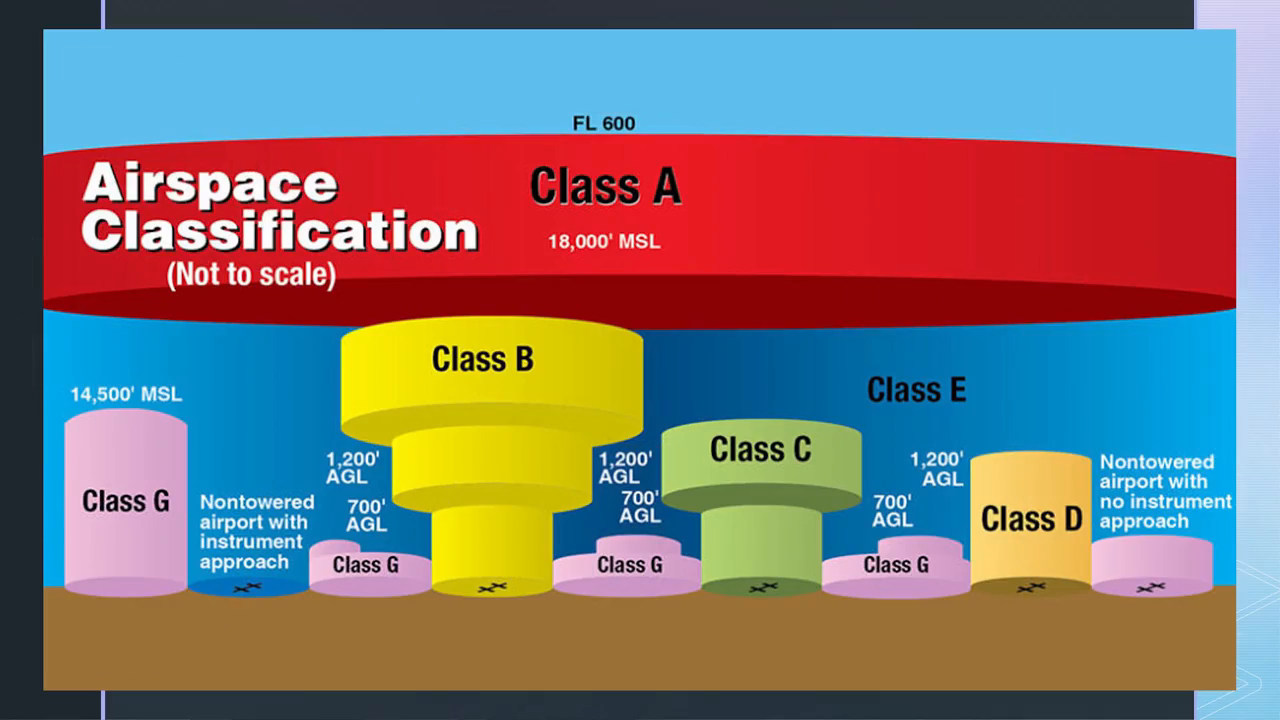
Before anything else... download the FAA Test Supplement. Print it. Live with it. The FAA gives you a copy during the exam, and a massive number of answers live right there on those pages. The Sectional Aeronautical Chart alone is a goldmine. If you've already spent weeks staring at it, you're not learning something new under pressure. You're greeting an old friend.

That's the whole strategy. Familiarity breeds confidence.
The Rules That Will Follow You Into the Testing Room
You need to be 16 years old. You retake a recurrent test every 24 months. Change your address? Notify the FAA within 30 days. Registration is $5, good for three years, and that registration number needs to be visually displayed on your drone. Not hidden inside a battery compartment... visible.
As Pilot in Command, you own everything. Maintenance. Safety. Every decision in the air. The Visual Observer is optional, there to supplement your Visual Line of Sight (VLOS). But the responsibility? That never transfers.
Accidents must be reported within 10 days through your FAA Drone Zone account if there's a serious injury... broken bones, loss of consciousness, lacerations requiring stitches... or property damage exceeding $500.
Airspace: The Big One
This is where a lot of folks stumble. Airspace classification is a major chunk of the exam.
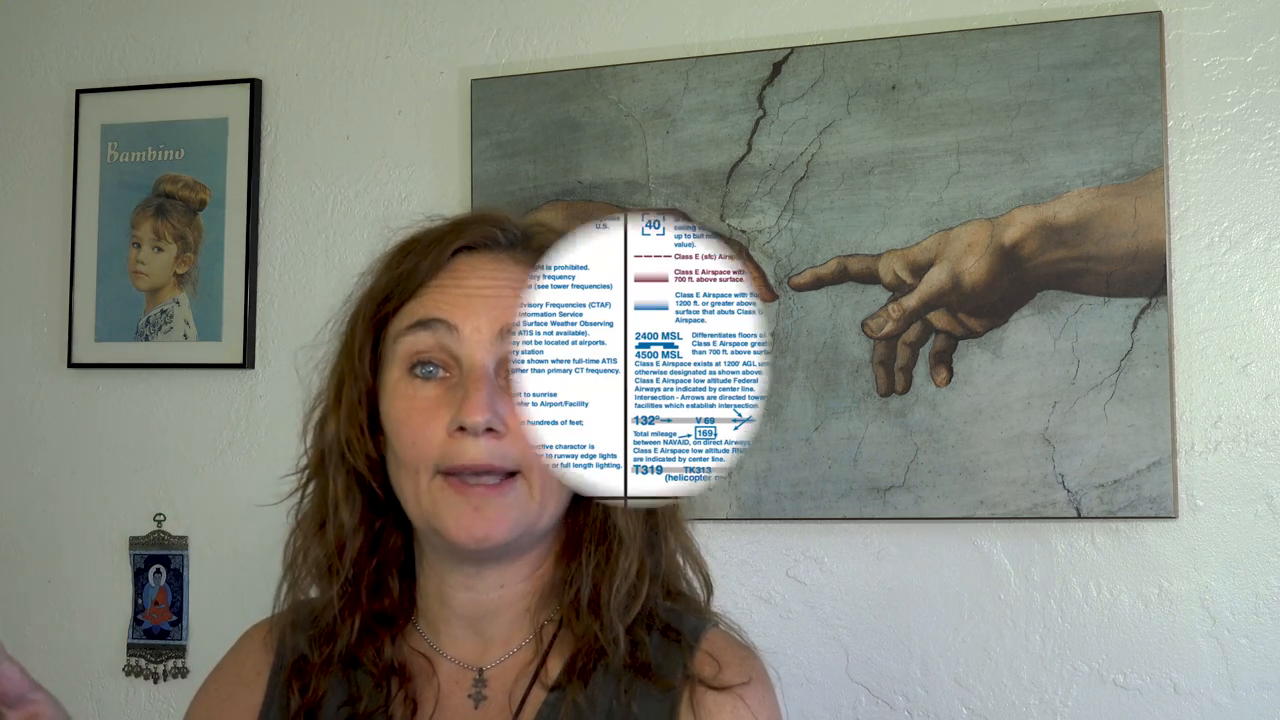
Think of it like layered cake. Class B Airspace sits around the busiest airports... dark blue lines on your sectional chart. Class C Airspace is magenta. Class D Airspace is dashed blue. Class E Airspace has multiple floor configurations depending on those fuzzy red and blue lines. And Class G Airspace? That's your playground. The only airspace where you can fly without FAA authorization.
Spend time with the chart. Trace the lines. Learn the colors. This isn't memorization for memorization's sake... it's spatial literacy that keeps people safe.
Operations Over People: The 2021 Update
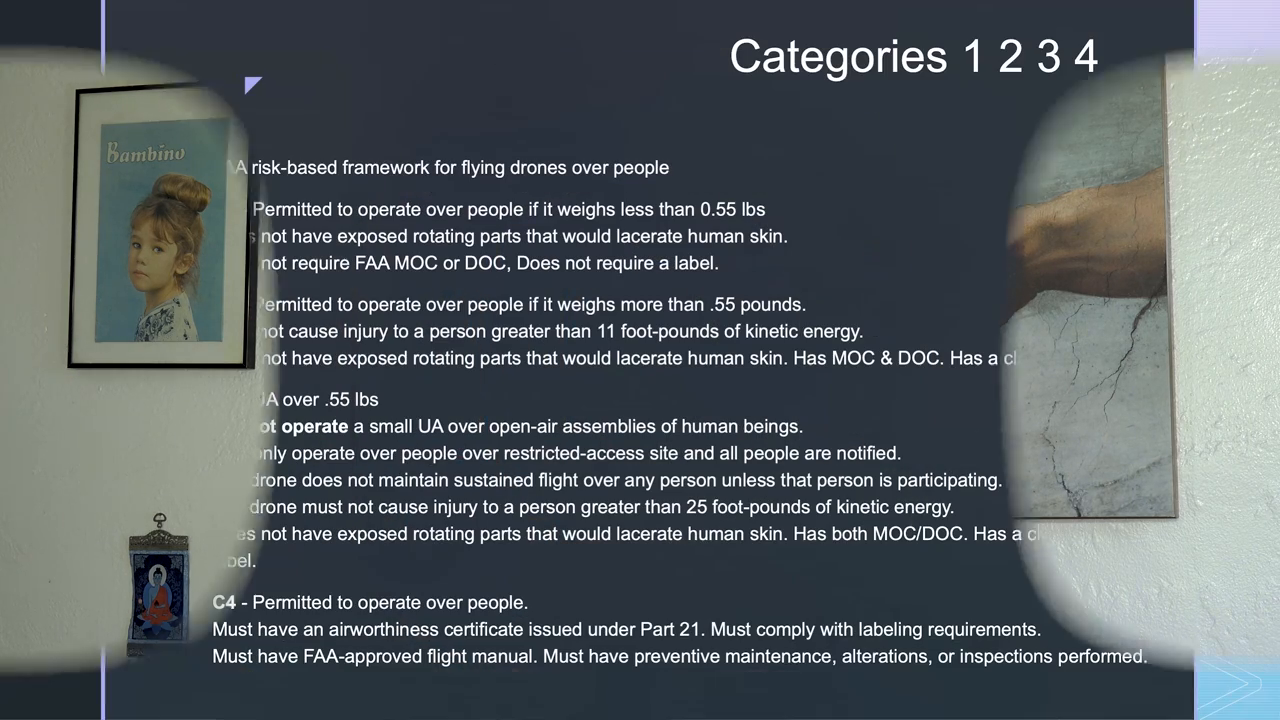
As of April 2021, the FAA permits routine operations over people, moving vehicles, and at night under specific conditions. No waiver needed... if you meet the category requirements.
- Category 1: Drone under 0.55 lbs, no exposed rotating parts. No special documents.
- Category 2: Over 0.55 lbs, must not exceed 11 foot-pounds of kinetic energy. Requires MOC and DOC documents plus a Category 2 label.
- Category 3: Over 0.55 lbs, up to 25 foot-pounds kinetic energy. Cannot fly over open-air assemblies. Requires MOC, DOC, and label.
- Category 4: Requires an airworthiness certificate, FAA-approved flight manual, and formal inspections.
Know the differences. They will be on your test.
Three Acronyms You Cannot Skip
IMSAFE: Illness, Medication, Stress, Alcohol, Fatigue, Emotion/Eating. Your personal fitness checklist before every flight.
PAVE: Pilot in Command (run your IMSAFE here), Aircraft, enVironment, External Pressure. Your risk assessment framework.
DECIDE: Detect, Estimate, Choose, Identify, Do, Evaluate. Your decision-making process when things go sideways.
These are guaranteed on the exam. Review them in the parking lot before you walk in.
Hazardous Attitudes: Know Them and Their Antidotes
The FAA identifies five hazardous attitudes in aviation:
- Anti-authority → Follow the rules.
- Impulsivity → Not so fast... think first.
- Invulnerability → It could happen to me.
- Machismo → Taking chances is foolish.
- Resignation → I'm not helpless. I can make a difference.
They'll ask you to identify the attitude or name the antidote. Sometimes both.
Night Flight and Weather
Daylight extends from 30 minutes before sunrise to 30 minutes after sunset. During civil twilight, your drone needs lights visible for 3 statute miles. Your eyes take 30 minutes to fully adapt to darkness... and red light preserves night vision better than white.
METAR and TAF weather reports show up on the exam even though most drone pilots rarely use them in the field. Learn to read wind direction, visibility, cloud layers, and weather codes like BR (mist). The test doesn't care if you'll use it tomorrow. It cares that you understand it today.
Minimum visibility for flight: 3 statute miles. Cloud clearance: 500 feet below, 2,000 feet horizontal. Max speed: 87 knots (100 mph).
The Alcohol and Fitness Rules
0.04% blood alcohol limit. Eight hours bottle-to-throttle. Drowsy from medication? Contact an Aviation Medical Examiner. Exhausted from a 12-hour drive? Rest. Stressed and anxious? Ground yourself before you fly anything else.
Katia said something that stuck with me... "If I can do it, you can do it." That's not motivational fluff. That's a woman who looked at completely unfamiliar material, felt overwhelmed, and chose to show up anyway. Repeatedly. Until the unfamiliar became second nature.
Three minutes without hope... that's where people quit. Don't quit in the first ten minutes of confusion. Sit with it. Print that supplement. Study the charts. Run through the acronyms until they live in your bones. The sky is waiting for people who've done the work to earn their place in it. ✨
You've got this. Now go study. 💪
Original video by Katia's Buzz Media 🐝 — Watch on YouTube ↗
Echoes
Wisdom from across the constellation that resonates with this article.
“FREE DRONE PILOT FAA Part 107 Study Guide. Get Ready to Ace the test 🐝 – Part 107 Study Guide – FREE DRONE PILOT FAA Part 107 Study Guide. To pass the Part 107 Drone Pilot exam, study the content in t”
— Katia’s Buzz Media 🐝 | FREE DRONE PILOT FAA Part 107 Study Guide. Get Ready to Ace the test 🐝 Same Expert