


Somewhere right now, a solo game developer is staring at a blank Blender viewport, convinced they need four years of 3D modeling experience before their dream game becomes real. They're wrong.
A pipeline exists today that takes a 2D concept illustration... generated by AI... and converts it into a fully textured, import-ready 3D character for Unreal Engine 5. In minutes. Not months. Minutes.
Let that land.
The Three-Step Path
The workflow is deceptively simple. Three tools. Three stages. One continuous thread from imagination to in-engine asset.

![[02:20] Windows file explorer displaying a grid of various AI-generated robotic ant concept art images with consistent styling.](/wp-content/uploads/video-articles/20260401-020627/key_02m20s.png)
Stage One: Leonardo AI and the Art of Consistent Concept Art.
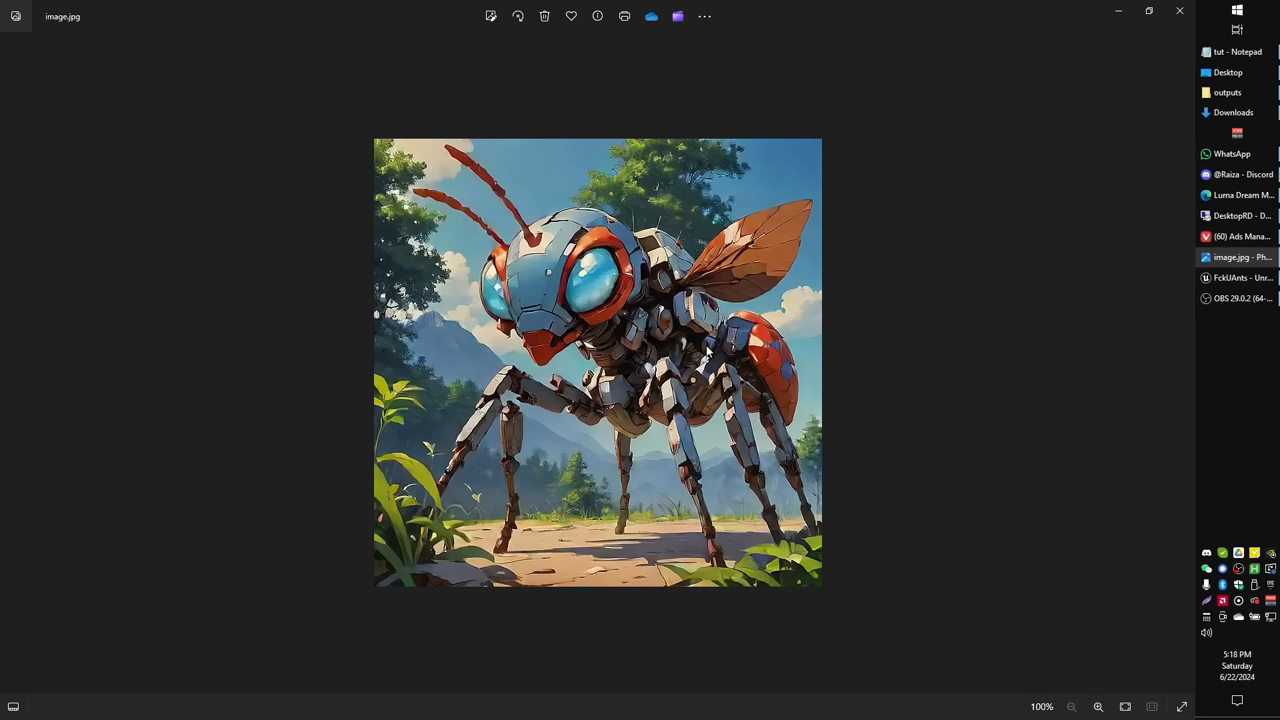
The realtime generation feature inside Leonardo AI isn't just another image generator. It's a visual dial-board. You type "robotic ant" and then... you sculpt. Slide toward Kids Illustration for something playful. Crank up Folk Art and suddenly you're staring at something the Brothers Grimm would've sketched by candlelight. The trick... the real trick... is saving your seeds, your slider positions, your prompt structures. Because consistency across characters is what separates "I made some cool pictures" from "I'm building a game."
The creator in this demo generated an entire roster of stylized characters using this method. Same art style. Different creatures. Cohesive visual language. That's not luck. That's workflow design.
Stage Two: Hyperhuman Rodin Turns Flat Art Into Geometry.
Upload your 2D concept. Rodin interprets it and spits back a 3D preview. First pass won't blow your mind. That's expected. The preview is a rough sketch... a conversation starter between you and the tool.
Here's where it gets interesting. Rodin has a text prompt field that lets you course-correct the AI's interpretation. In the demo, the model initially fused some leg geometry together. By simply typing "with four mechanical legs," the creator guided Rodin to separate the structures correctly. That's not automation replacing the artist. That's human-AI collaboration... iterative, conversational, intentional.
Toggle on Hyper mode for thin surfaces like antenna. Choose your polygon count. Confirm. Generation takes about a minute.
Then comes texture. Rodin generates PBR textures based on your original 2D reference image... diffuse, metallic, normal, roughness maps. The 4K texture option is a paid upgrade, but the quality difference is significant enough to matter. The creator was direct about this: the free 1K textures work, but 4K textures look "a lot lot better." When your entire character pipeline costs a fraction of what a single freelance 3D model would run, that upgrade earns its place in the budget.
Stage Three: Into Unreal Engine 5.
Export as FBX. Drag into Unreal. Connect your texture maps in the Material Graph... base color, metallic, normal, roughness. Apply the material to your mesh. Done.
The creator placed the finished ant character into a lit game environment and paused. Concept art on one side. In-engine 3D model on the other. Side by side. The resemblance was striking.
Who This Is Actually For
This pipeline won't replace a senior character artist building photorealistic humans for a AAA studio. Not yet. The creator was honest about that... realistic human models aren't this workflow's strength today.
![[03:45] Hyperhuman Rodin interface showing the initial, unrefined 3D geometry preview and generation settings.](/wp-content/uploads/video-articles/20260401-020627/key_03m45s.png)
![[05:43] Refined 3D mesh in Rodin's interface after the creator updated the prompt to fix the mechanical legs.](/wp-content/uploads/video-articles/20260401-020627/key_05m43s.png)
But for indie game development? For solo developers building stylized worlds with stylized creatures? This is a gate that just swung wide open 💪
Think about it. A single person with a vision, a laptop, and maybe twenty dollars in AI credits can now generate consistent concept art, convert it to textured 3D models, and import those models into a professional game engine. The same person can then rig those static meshes using Unreal Engine 5's built-in skeletal rigging tools and apply procedural walk animations.
That's not a shortcut. That's a ladder where there used to be a wall.
The Nuance That Matters
Some things to hold with open hands:
![[06:54] Side-by-side in Rodin showing the fully textured 3D model next to the original 2D reference image.](/wp-content/uploads/video-articles/20260401-020627/key_06m54s.png)
![[08:42] Unreal Engine 5 FBX Import Options dialog box used for bringing the 3D model into the game engine.](/wp-content/uploads/video-articles/20260401-020627/key_08m42s.png)
- Solid geometry converts better than fine detail. Characters with thick limbs, clear silhouettes, and bold shapes produce cleaner 3D results than models with thin hairs, wispy tendrils, or intricate filigree.
- AI variation means iteration is part of the process. You won't get a perfect result on the first generation every time. You'll tweak prompts. You'll regenerate textures. You'll toggle settings. The tool accelerates... it doesn't eliminate the craft.
- Consistency requires discipline. Save your seeds. Document your sliders. Treat your Leonardo AI settings like a recipe you'll need to cook from again.
This is still creation. Still craft. Still requires your eye, your judgment, your taste. The tools just removed the part where you needed three years of Blender tutorials before you could start.
Why This Matters Beyond Game Dev
Every time a tool lowers the barrier between imagination and tangible output, more voices get to build. More stories get told. More weird, wonderful, "nobody-asked-for-this-but-I'm-so-glad-it-exists" games show up in the world.
The creator's robotic ant character started as a text prompt. It ended as an animated creature walking through a lit game environment. The whole journey... concept to in-engine... measured in minutes, not months.
That's not just a workflow improvement. That's a shift in who gets to be a game developer.
If you've been sitting on a game idea because you can't model in 3D... that excuse just expired. The tools are here. The pipeline works. The only thing missing is you deciding that your weird, beautiful, slightly-ridiculous game concept deserves to exist. So go make your robotic ant. Or your mechanical owl. Or whatever creature has been living rent-free in your imagination. The path from your head to the game engine just got a whole lot shorter ✨
Original video by Werewolven — Watch on YouTube ↗
Echoes
Wisdom from across the constellation that resonates with this article.
“3D AI Model Generation is Getting GOOD – UE5.4 Unreal Engine – 🐺 EZRig Character Rigging [ https://1dudedevteam.gumroad.com/l/ezrig ] 🐺 Rodin AI 3D Model Generation [ https://hyperhuman.top/r/5IF2H4EC”
— Werewolven | 3D AI Model Generation is Getting GOOD – UE5.4 Unreal Engine Same Expert