


Leslie Baugh lost both arms in a freak electrical accident over 40 years ago. Forty. Years. Let that settle. Then one day, a team of surgeons, engineers, and puzzle-solvers said... "What if we give him his hands back?"
The Simple Thing
Les didn't dream about bench pressing or throwing a football. He dreamed about putting change in a pop machine.
Let that wreck you for a second.
We walk past vending machines every day. We fumble for quarters without thinking. And somewhere in Colorado, a man spent four decades watching other people do what we treat as nothing. The thing Les wanted most wasn't spectacular. It was ordinary. And that's what made it sacred.
Nerves, Algorithms, and Plaster
Here's where it gets wild.
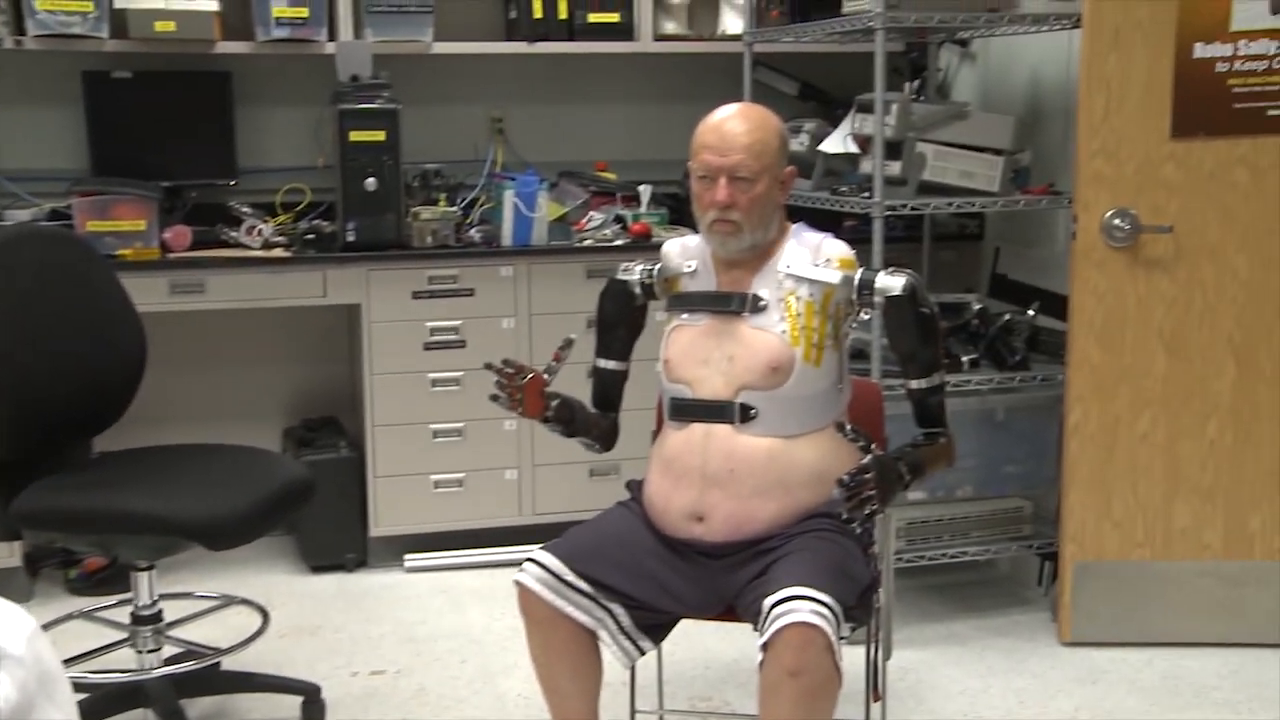
Dr. Albert Chi and the team at Johns Hopkins Applied Physics Laboratory performed targeted muscle reinnervation surgery... rerouting the nerves that once controlled Les's arms into his chest muscles. Think about that. They took signals that had been screaming into the void for 40 years and gave them somewhere to land.
Then pattern recognition algorithms learned to listen. High-density electrode arrays on his chest picked up what his brain was saying... decoded the symphony of muscle activity... and translated thought into movement. Not button-pushing. Not joystick-steering. Thought.
Les thinks "close hand." The hand closes.
If that doesn't sound like something straight out of a Star Wars cybernetics lab, I don't know what does. Luke Skywalker flexing his new hand at the end of Empire? We're living in that timeline now. Except this isn't a galaxy far, far away. This is a lab in Maryland. And the hero isn't fictional.
Old School Meets New World
One of my favorite details hides in the middle of this story.

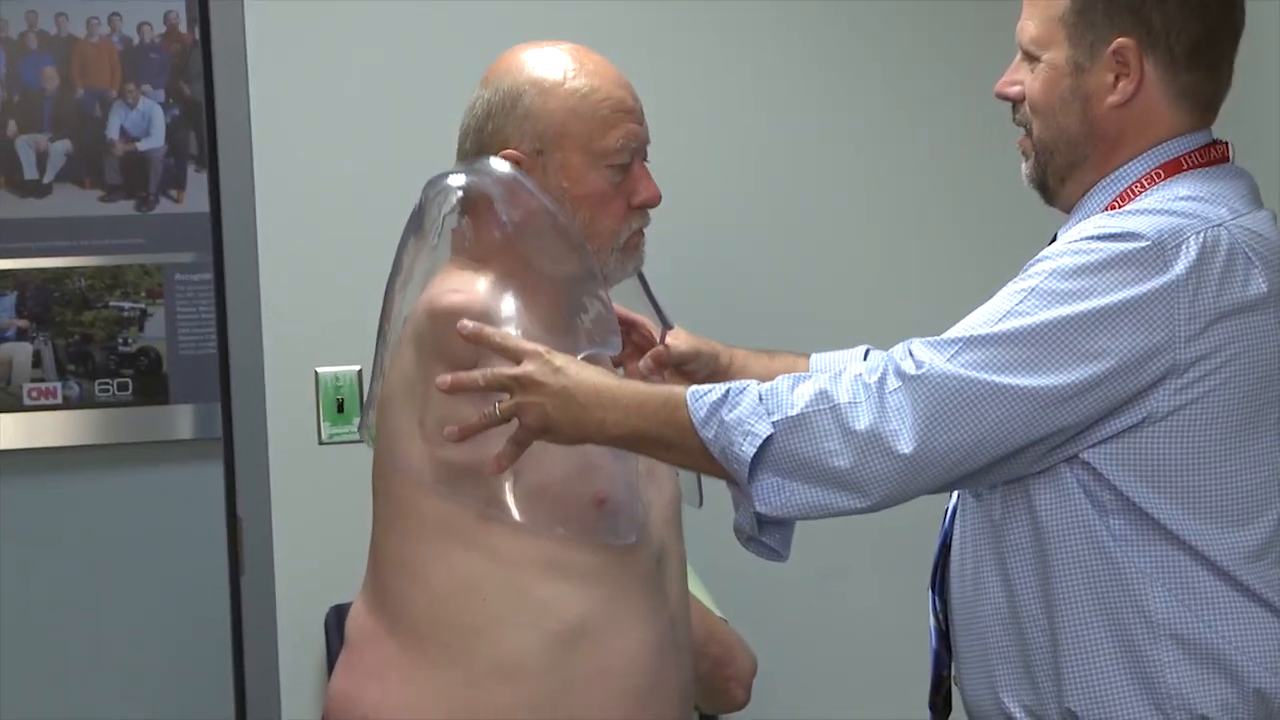
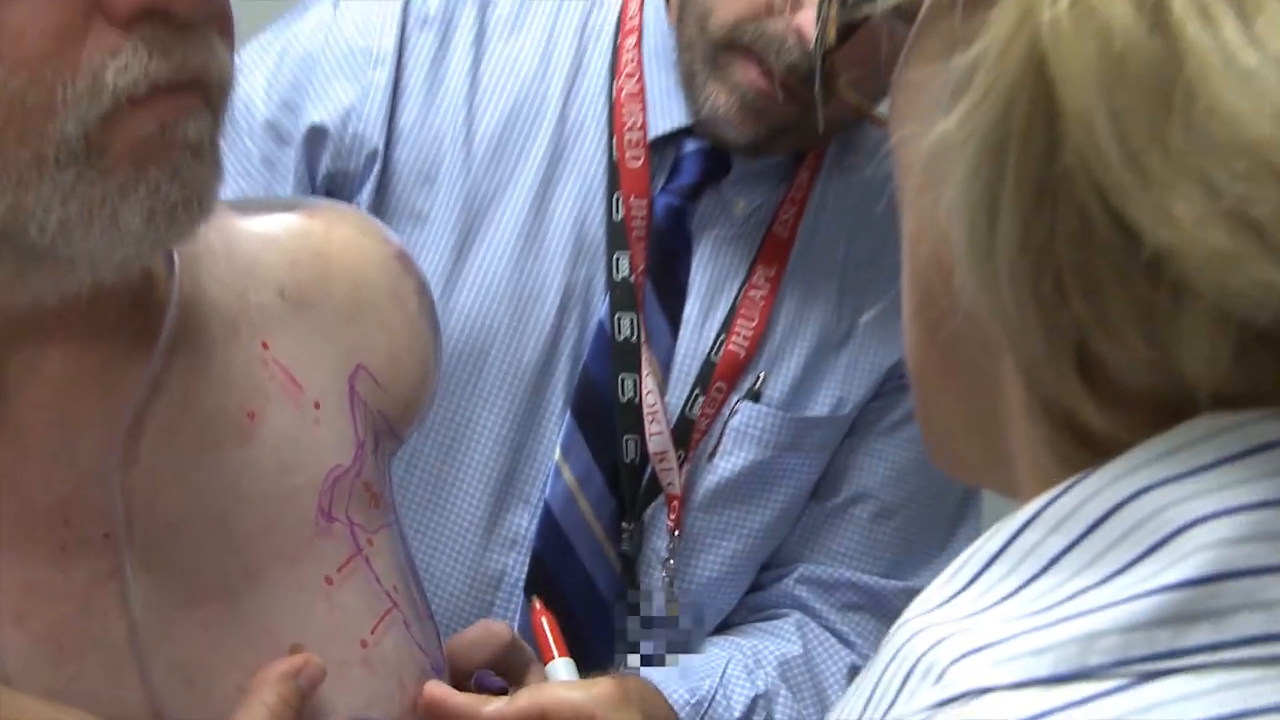
The team first tried scanning Les's body with cutting-edge 3D technology. Modern. Clean. Digital. And it worked... fine. Then one of the socket fabricators said, "No. I can't feel every little dimple and divot that I want to feel. I want to do it with plaster."
Old school crushed it.
There's a lesson in there that I keep turning over. Innovation doesn't mean abandoning what works. Sometimes the most advanced thing you can do is pick up the tools your mentors used and trust the craft. The plaster knew things the scanner couldn't see. Human hands reading a human body... building the bridge between flesh and machine.
Cutting-edge and time-tested aren't enemies. They're partners.
The Quietly Working Crew
Les is the face of this breakthrough. And he should be. His courage... volunteering for excruciating surgery, trusting a process nobody had completed before at this level... that's warrior territory.
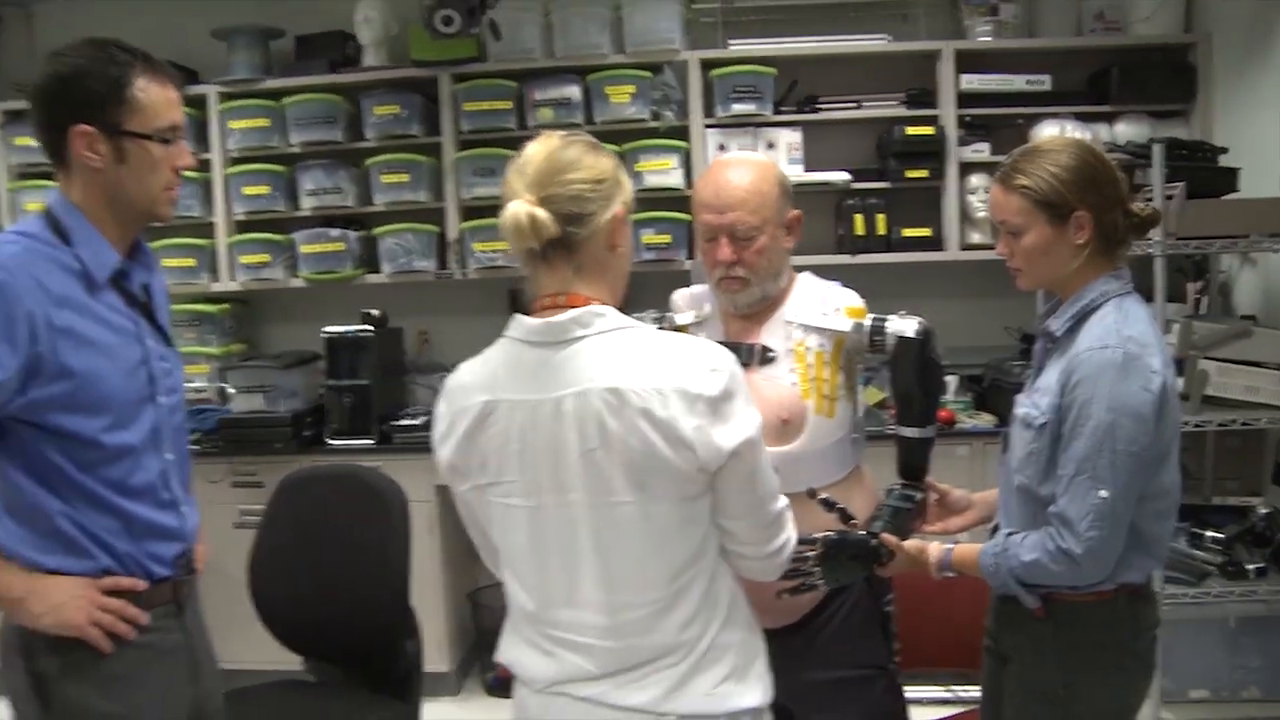
But behind him? An army of people you'll never know by name.
The DARPA program managers who fought for funding. The software engineers who refined pattern recognition algorithms until the signal-to-noise ratio was clean enough to trust. The prosthetist who chose plaster over pixels because precision mattered more than speed. Courtney Moran, the clinical lead, who reminded everyone that the goal isn't accomplishment... it's getting this into the hands (literally) of the people who need it.
Quietly working. Making someone else visible.
That's the work that changes worlds.
Virtual Before Physical
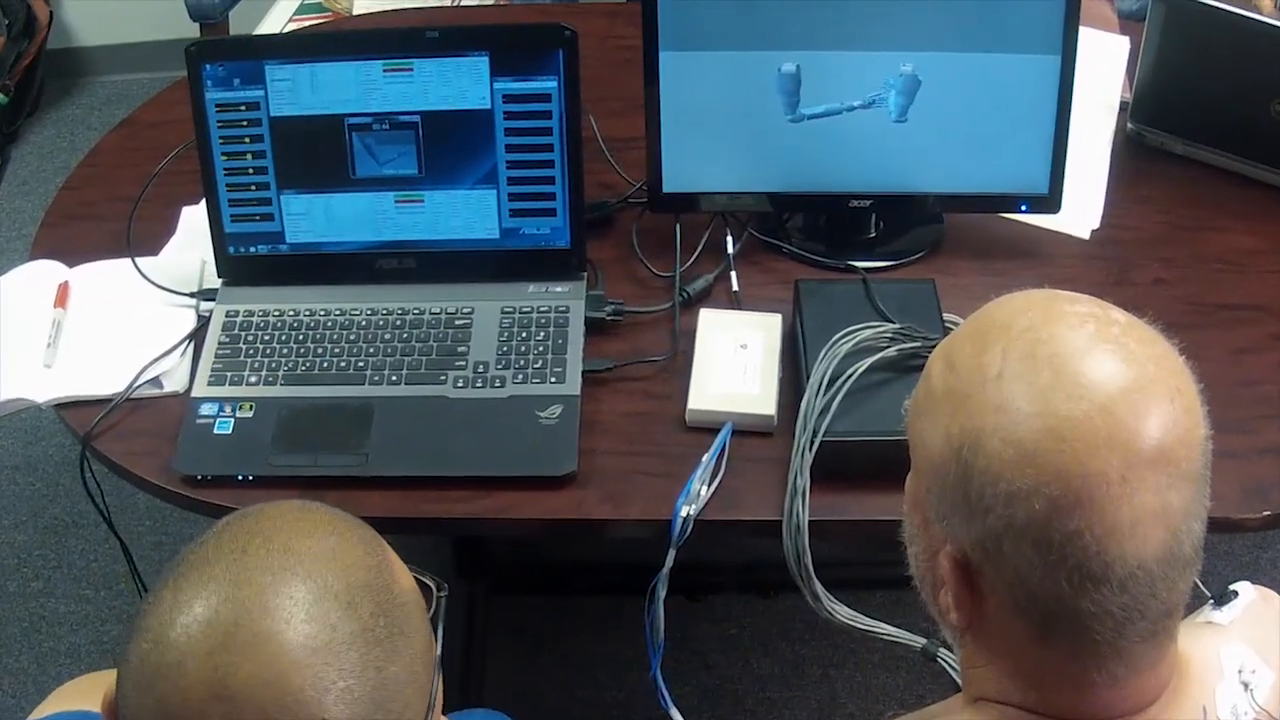
Before Les ever touched the Modular Prosthetic Limb, he trained in virtual reality. Electrodes on his chest. A laptop screen showing two digital arms. He thought. The arms moved. He practiced controlling shoulder, then elbow, then wrist, then hand... separately... resting in between.
It looked nothing like the dramatic movie moment.
It looked like patience. Like reps. Like a man relearning what his body forgot how to do four decades ago.
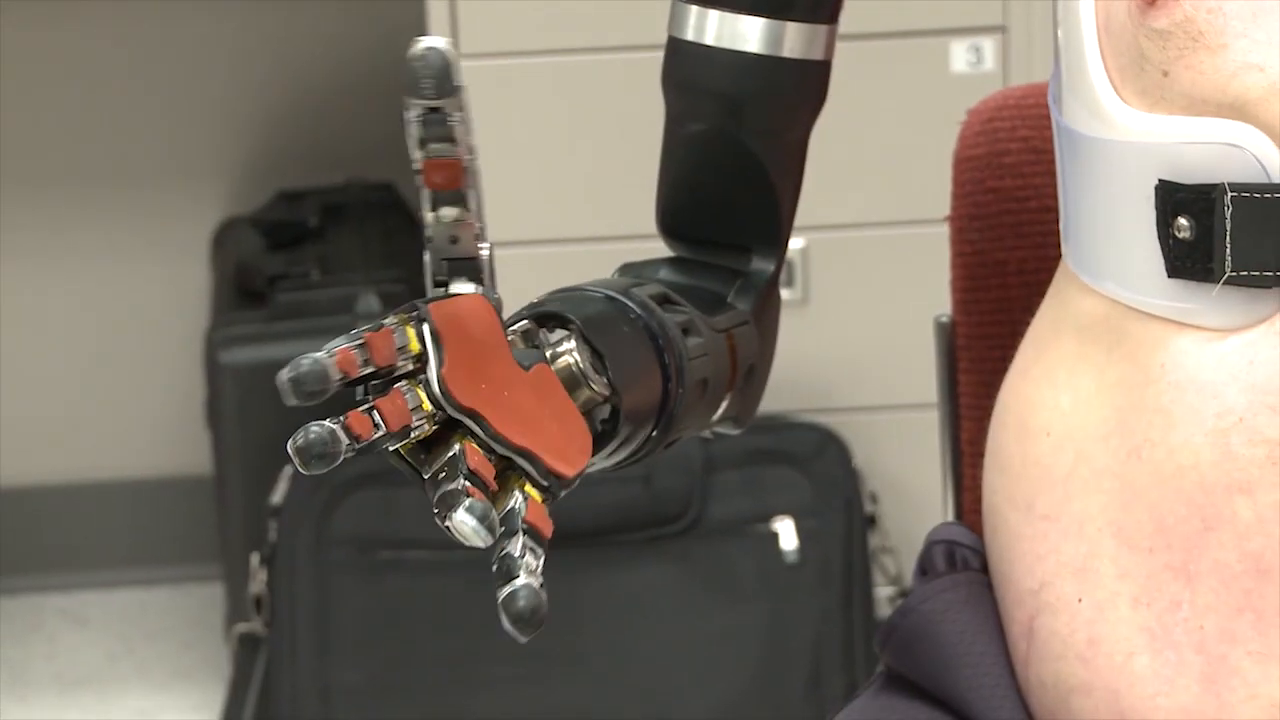
Mike McLoughlin, the program manager, compared it to the early days of the internet. "There's just a tremendous amount of potential ahead of us, and we've just started down this road." He's right. This was the first time MPLs operated at full three degrees of freedom with over 30 total degrees of motion on both sides... through complete, intuitive, thought-based control. First. Time. Ever.
And Les did it.
Three Minutes Without Hope
I keep coming back to something I carry everywhere.
Three months without food. Three days without water. Three minutes without hope.
Les Baugh went 40 years without arms. But he never went three minutes without hope. Something in him kept believing that one day, the world would catch up to what he needed. And a team of brilliant, stubborn, quietly working humans proved him right.
Dr. Albert Chi said the quiet part out loud: "We'd really like to be able to send him home with a couple of limbs so that he can use them in his everyday life. And what this has showed us is that that's really possible."
Not theoretical. Not someday. Possible. Now.
The Frontier
Courtney Moran said something that won't leave me alone: "It's not just the accomplishment, but the opening of frontiers and realizing that there's so much more to learn."
That's the thing about breakthroughs. They don't close chapters. They crack open doors you didn't know existed. Behind every solved problem lives a hundred new questions... and that's not frustrating. That's beautiful. That's the universe saying, "Keep going. There's more."
Every person reading this carries something they've been waiting 40 years to get back. Maybe not arms. Maybe it's confidence. Purpose. Connection. The ability to do something "simple" that everyone else takes for granted.
The frontier is open.
Les Baugh reached out with a mind-controlled robotic hand and picked up a ball. It wasn't dramatic. It was holy. Forty years of waiting met by a team that refused to stop building. Old-school plaster and bleeding-edge algorithms. Vulnerability and engineering. Patience and possibility.
If you're in the waiting... if you've been there for what feels like forever... hold on. Somewhere, someone is quietly working on the thing that will change everything for you. And maybe... just maybe... you're quietly working on it for someone else. 💙
That's the gig. That's the beautiful, broken, extraordinary gig.
Original video by Johns Hopkins Applied Physics Laboratory — Watch on YouTube ↗
Get the Ultimate Gemstone Look with These AdvancedA professional VFX lighting lead’s free crystal tutorial reveals deep parallels between procedural damage in 3D modelingPatience, Craft MasteryMy Life StoryDerek Muller’s journey from safe engineering career to Veritasium reveals the paradox of survivor bias: attempting doesnCraft Mastery, Resilience
Echoes
Wisdom from across the constellation that resonates with this article.
“Note the old-school-meets-new-world principle: validate assumptions about modern tools vs. traditional craft”
— Johns Hopkins Applied Physics Laboratory | Amputee Makes History with APL’s Modular Prosthetic Limb Same Expert
“Consider the VR-to-physical training pipeline as a model for other rehabilitation and skill-acquisition contexts”
— Johns Hopkins Applied Physics Laboratory | Amputee Makes History with APL’s Modular Prosthetic Limb Same Expert
“Explore how targeted reinnervation surgery principles could apply to other nerve-interface challenges”
— Johns Hopkins Applied Physics Laboratory | Amputee Makes History with APL’s Modular Prosthetic Limb Same Expert